

Executive Summary
The past week in AI was we had Google’s rollout of Gemini 3, its most advanced multimodal model integrated into core products like Search and Workspace, alongside OpenAI’s massive $38 billion partnership with AWS to solidify cloud infrastructure for AI training and deployment. We also had breakthroughs in medical AI, including high-accuracy dementia detection via EEG signals and AI-enhanced cardiac MRI suites, highlighting the technology’s growing role in healthcare diagnostics. These developments show a strategic shift toward scalable, enterprise-ready AI ecosystems, with implications for enhanced productivity, regulatory compliance, and competitive advantages in sectors like tech, finance, and biotech, while at the same time raising concerns over infrastructure dependencies and cybersecurity risks.
Strategic Analysis
Deep Dive into Gemini 3 Deployment
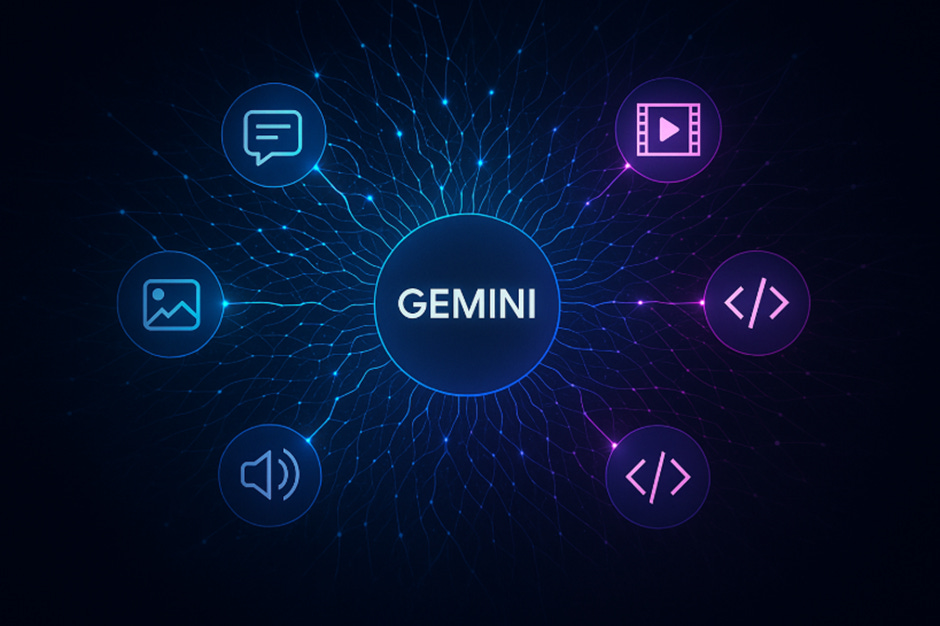
Google’s Gemini 3 represents a flagship multimodal AI model with an Elo rating exceeding 1500, excelling in processing text, code, images, audio, and video. Launched as part of Google’s “sim shipping” strategy, it’s being embedded across its ecosystem, including Search for real-time AI thinking, Waymo for autonomous driving, and Workspace for “vibe coding” where non-technical users build software via natural language.
Business Impact: For enterprises, this lowers barriers to AI adoption through familiar interfaces, boosting efficiency in customer experience, marketing automation, and product design by up to 3x in imaging speed for specialized applications like cardiac diagnostics. It positions AI as an “intelligence layer” in operations, potentially reducing development costs by 20-40% via seamless integration and reducing bottlenecks in high-volume workloads. However, it intensifies competition in multimodal AI, pressuring companies reliant on single-modality tools to upgrade or risk obsolescence.
Implementation Framework: Start with a pilot integration phase by assessing current workflows (e.g., data processing or content creation) for multimodal gaps, then deploy Gemini 3 via APIs for targeted use cases like automated reporting.
Follow with scaling: Train teams on prompt engineering, monitor ROI through metrics like task completion time, and iterate based on feedback. Ensure compliance by layering privacy controls, aligning with frameworks like the EU AI Act for high-risk applications.
Deep Dive into OpenAI-AWS $38B Partnership
OpenAI’s multiyear $38 billion deal with AWS establishes the latter as the primary cloud provider for OpenAI’s model training and enterprise deployments, including features like the new personal shopper agent in ChatGPT that handles product research privately. This builds on similar alliances, such as Microsoft/NVIDIA’s $15 billion investment in Anthropic, underscoring a trend toward consolidated AI infrastructure.
Business Impact: Enterprises benefit from streamlined access to advanced LLMs within AWS ecosystems, enhancing supply chain analytics and e-commerce personalization while cutting latency and costs for real-time applications. It could accelerate AI adoption in retail during peak seasons, but it heightens risks of vendor lock-in and escalates compute demands, with global AI-related debt reaching $1.5 trillion. The deal also amplifies cybersecurity concerns, as evidenced by the first reported AI-orchestrated cyberattack this month, where agents managed full attack lifecycles.
Implementation Framework: Adopt a multi-cloud assessment model: Map AI workloads to providers (e.g., AWS for OpenAI-heavy tasks), then build hybrid architectures for redundancy. Use a phased rollout: Begin with low-risk integrations like data synthesis, advance to agentic workflows, and incorporate risk mitigation via NIST AI RMF audits. Measure success through cost savings and performance benchmarks, adjusting for geopolitical factors like U.S. initiatives in AI infrastructure.
Action Items
Evaluate Multimodal AI Integration: Audit your organization’s tools for compatibility with models like Gemini 3; pilot in one department (e.g., marketing) to automate content generation, targeting 20% efficiency gains within three months.
Reassess Cloud Strategies: Review dependencies on providers like AWS or Azure; diversify with open-weight options like Mistral to mitigate lock-in risks, and allocate budget for TPU/GPU migrations to cut training costs by 20-40%.
Enhance AI Governance for Risks: Implement mandatory assessments for agentic systems, incorporating explainable AI features as in dementia detection models; train teams on cybersecurity protocols to counter emerging threats like AI-driven attacks.
Explore Medical AI Applications: For healthcare-adjacent businesses, test EEG-based diagnostic tools or cardiac MRI suites in R&D; partner with labs to customize protein design models like BoltzGen for drug discovery pipelines.
Foster Open-Source Collaboration: Leverage models like DeepSeek Math V2 for internal R&D in finance or engineering; contribute to community efforts to build custom agents, reducing reliance on proprietary systems.
Executive Insight
The acceleration in AI infrastructure and multimodal capabilities this week underscores a pivotal moment where technology transitions from experimental to foundational, much like the internet’s evolution in the late 1990s, but at warp speed. I see these advancements as double-edged: They democratize innovation, enabling breakthroughs in healthcare and efficiency that could solve pressing global challenges, yet they concentrate power in a few ecosystems, risking monopolies and ethical oversights. Personally, I view the rise of agentic AI, like Claude Opus 4.5 outperforming humans in coding, as a call for balanced progress, prioritizing open-source alternatives to ensure AI serves humanity’s curiosity rather than corporate silos, promoting a future where intelligence amplifies, not replaces, our collective potential.