


Executive Summary
Another great week for AI developments (November 9-15, 2025). Last week we saw OpenAI launching GPT-5.1, introducing faster reasoning modes and group chat features. At the same time, Anthropic, committed $50 billion to U.S. AI infrastructure, signalling a massive push toward domestic data centres amidst an ongoing intensified global competition. Google DeepMind unveiled SIMA 2, an advanced AI agent for gaming and real-world tasks, and interestingly Baidu released an open multimodal model claiming superiority over GPT-5, highlighting another accelerating race, this time in open-source AI capabilities. These developments underscore strategic implications for businesses, including enhanced productivity tools, supply chain shifts toward U.S.-centric AI ecosystems, and opportunities for cost-effective open models to disrupt proprietary dominance.
Strategic Analysis
OpenAI’s GPT-5.1 Launch: Elevating Reasoning and Collaboration
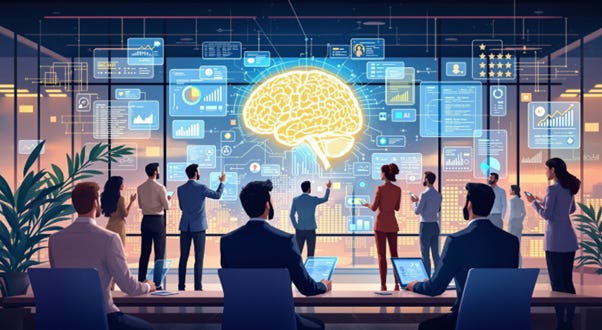
OpenAI’s introduction of GPT-5.1 represents a major advancement in large language model performance, which has become evident in its deployment of “Instant” and “Thinking” modes designed for quick responses or advanced problem-solving, as well as its potential for new collaborative workflows through group chats. The current model improves ease of use over previous models across its various features, including producing faster code production, faster data analysis, and multi-user interactions - possibly in a way that would allow enterprise users to stop using many other specialized tools.
Business Impact Analysis:
Productivity Gains: GPT-5.1 could cut decision-making time by up to 30-50% in sectors like software development and consulting and in any area where real-time reasoning accelerates prototyping and strategy sessions.
Competitive Edge: Companies integrating this into customer service or R&D may see 20-40% cost savings on human labour, but the risks to include over-dependence on a single vendor remain, keeping in mind mind the rising subscription fees.
Market Disruption: With OpenAI surpassing 1 million business customers, this positions it against Microsoft and Google AI options, potentially shifting market share in cloud AI services.
Implementation Framework:
Assessment Phase: Audit current workflows to identify high-impact areas (e.g., via SWOT analysis on AI integration points).
Pilot Integration: Deploy GPT-5.1 in a sandbox environment using APIs for 4-6 weeks, measuring KPIs like task completion speed and error rates.
Scaling Strategy: Adopt a phased rollout with training programs, ethical guidelines, and hybrid human-AI oversight to mitigate biases.
Monitoring & Iteration: Use analytics tools to track ROI, adjusting based on feedback loops every quarter.
Anthropic’s $50 Billion U.S. AI Infrastructure Investment

Anthropic’s pledge to invest $50 billion in data centres across Texas and New York emphasizes building sovereign AI capabilities, partnering with Microsoft for hardware and reducing reliance on foreign supply chains. This move comes in the middle of geopolitical tensions, including China’s AI chip bans, and aims to support scalable training of frontier models like Claude.
Business Impact Analysis:
Supply Chain Resilience: Enhances U.S. firms’ access to high-performance computing, potentially lowering latency and costs by 15-25% for domestic operations while hedging against global disruptions.
Regulatory Alignment: Aligns with emerging policies favouring national AI sovereignty, offering tax incentives but raising concerns over energy consumption and environmental footprints.
Innovation Acceleration: Could fuel breakthroughs in safe AI agents, as seen in Anthropic’s disruption of an AI-led cyber espionage campaign, benefiting cybersecurity sectors?
Implementation Framework:
Strategic Alignment: Evaluate your AI roadmap against U.S.-based infrastructure trends using a PESTLE analysis to identify geopolitical risks.
Partnership Exploration: Collaborate with providers like Anthropic or Microsoft for pilot data centre access, starting with hybrid cloud migrations over 6-12 months.
Sustainability Integration: Incorporate green energy metrics into contracts, aiming for carbon-neutral operations via tools like Google’s Project Suncatcher.
Risk Management: Establish governance boards to monitor compliance and scalability, with annual audits to adapt to evolving regulations.
Action Items
Test GPT-5.1: Integrate GPT into one of your team’s workflow (e.g., brainstorming sessions) via OpenAI’s API. Track efficiency gains over the next two weeks and report findings to the leadership.
Assess Infrastructure Partners: Review current cloud providers and explore Anthropic or Microsoft options for AI workloads; initiate RFPs for U.S.-based data centres to ensure compliance and cost optimization.
Adopt Open Multimodal Tools: Experiment with Baidu’s ERNIE 4.5 or similar open-source models for vision-language tasks; allocate a small budget for prototyping in marketing or product development.
Enhance AI Safety Protocols: Following Anthropic’s cyber insights, conduct an internal audit of AI systems for vulnerabilities and implement agentic safeguards like OS-Sentinel.
Upskill Teams: Mandate 2-4 hours of training on new tools like NotebookLM’s Deep Research or ElevenLabs Scribe v2 to leverage real-time transcription and analysis in meetings.
Executive Insight
The trajectory of both the rapid advancements of new models like GPT-5.1 and the heavy infrastructure bets from Anthropic, suggests that we are approaching an era of AI where it becomes a foundational business imperative, with the future of businesses that cannot adapt becoming uncertain. From my perspective, the news this week help to confirm the value of an open, collaborative AI ecosystem guided by curiosity and efficiency against closed silos, hopefully empowering executives to capitalize on these advancements and have a durable competitive advantage without getting lost in the hype.