


Executive Summary
In the week of November 3-9, 2025, OpenAI restructured into a Public Benefit Corporation with a $1.4 trillion compute roadmap and signed a $38 billion AWS deal with the goal to diversify its infrastructure. At the same time we have new models like Moonshot AI’s Kimi K2 and Cursor’s Composer that are pushing the boundaries in efficiency and agentic capabilities. Robotics advanced with XPENG’s IRON humanoid set for 2026 production – Elon Musk has competition, and we have seen efficiency breakthroughs like Extropic’s thermodynamic chips promised up to 10,000x energy savings - important amid the surging AI adoption in sectors like marketing and manufacturing.
These developments signal once more a shift toward cost-effective and scalable AI systems, putting pressure on executives to prioritize infrastructure diversification and ethical integration while mitigating risks like job displacement and energy demands.
Strategic Analysis
OpenAI’s Restructuring and $38B AWS Partnership
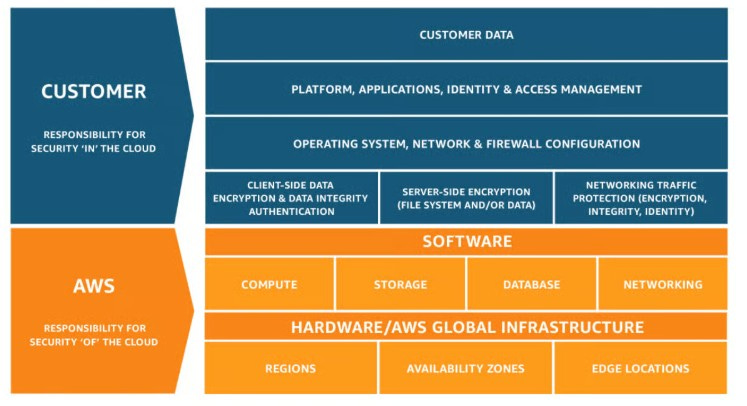
OpenAI’s transition to a Public Benefit Corporation (PBC) structure, coupled with its massive seven-year $38 billion compute deal with AWS, marks a pivotal move away from exclusive reliance on Microsoft Azure. This will enable faster scaling toward a $1.4 trillion infrastructure plan. At the same time, this diversification addresses compute bottlenecks in the middle of explosive growth, with OpenAI reaching 1 million business users, making it its fastest adoption milestone yet, while at the same time launching features like interruptible queries and an upgraded Codex for production-ready applications.
Business Impact Analysis
What does this mean for enterprises? Take this as a signal for intensified competition in AI infrastructure, that could potentially lead to lowering costs through multi-cloud strategies while raising concerns over data sovereignty and vendor lock-in.
Industries like finance and healthcare could see 20-30% productivity boosts from agentic tools, but over-reliance risks amplifying AI’s energy footprint, projected to consume up to 8% of global electricity by 2030.
Smaller firms on the other hand may face barriers due to the $1.4 trillion scale favouring hyperscalers, widening the AI divide.
Implementation Framework
Adopt a phased “AI Infrastructure Maturity Model”:
(1) Assess current compute dependencies via audits;
(2) Pilot multi-provider setups (e.g., AWS + Azure) for redundancy; Dependency on one provider should be avoided.
(3) Integrate agentic workflows using tools like OpenAI’s Agent Mode, starting with low-risk tasks like data analysis;
(4) Monitor ROI through metrics like inference speed and cost-per-query, aiming for 4x efficiency gains as seen in similar hybrid models. Use frameworks like NIST’s AI Risk Management to embed governance from day one.
Breakthroughs in Model Efficiency and Robotics
Moonshot AI’s Kimi K2, a 1 trillion-parameter open-weight MoE model, achieved state-of-the-art performance in coding and agentic tasks with 6x decoding throughput.
Extropic’s chips claimed 10,000x energy efficiency for probabilistic computations.
In robotics, XPENG unveiled the IRON humanoid for mass production in late 2026, integrating advanced AI for customizable tasks, alongside benchmarks like Terminal-Bench 2.0 for real-world agent evaluation.
Business Impact Analysis
These innovations appear to democratize high-performance AI for edge devices and factories, which in turn reduces operational costs by up to 90% in energy-intensive sectors like manufacturing and logistics. However, we should not forget that they accelerate job market shifts, with agentic AI potentially automating 30% of roles in operations by 2030, as seen in enterprise Copilot rollouts.
For consumer brands, tools like Coca-Cola’s AI-generated ads (cutting production from 12 months to 30 days) highlight creative efficiencies but risk backlash over quality.
Implementation Framework
Leverage a “Hybrid AI Deployment Pipeline”:
(1) Benchmark models like Kimi K2 against proprietary ones for cost-benefit analysis;
(2) Prototype edge AI pilots using efficient chips for real-time applications (e.g., supply chain optimization);
(3) Train robotics via simulation-to-real transfer, as in DreamGym, to minimize risks;
(4) Scale with ethical guardrails, such as Character AI’s minor bans, tracking impacts via KPIs like automation ROI and workforce reskilling rates.
Action Items

Audit AI Infrastructure: Review cloud dependencies and explore multi-provider options like AWS-OpenAI integrations to reduce risks. Set a target for completion in Q1 2026 for 20% cost savings.
Pilot Efficient Models: Test open-weight models like Kimi K2 in non-critical workflows (e.g., coding agents) and measure efficiency gains; allocate a cross-functional team to deploy within 30 days.
Prepare for Robotics Integration: Assess factory or operations for humanoid AI pilots, partnering with vendors like XPENG; develop a reskilling program for affected roles, aiming for 50% workforce upskilling by mid-2026.
Enhance Ethical Oversight: Implement AI governance frameworks, including age detection and privacy tools, to comply with emerging regs like the GUARD Act; conduct quarterly red-team audits on all deployments.
Track ROI Metrics: Establish dashboards for AI initiatives, focusing on productivity (e.g., 4x faster code gen) and energy use, with monthly reviews to pivot strategies.
Executive Insight
The AI landscape is accelerating toward a multi-polar ecosystem where compute diversification and efficiency are becoming survival imperatives, as seen in OpenAI’s bold moves and the rise of energy-thrifty innovations. From my point of view, this week’s developments underscore the need for balanced progress. While agentic and robotic AI promise transformative productivity, unchecked scaling risks exacerbating societal divides, like the 97% failure rate of AI on real freelance tasks. Personally, I see this as an opportunity for human-AI symbiosis. Prioritize adaptability over hype to thrive in this era. Make sure you are taking cautious steps, not overspending or overinvesting in AI. There is a hype at the moment, which could lead to another bubble burst like the dot-com one.