

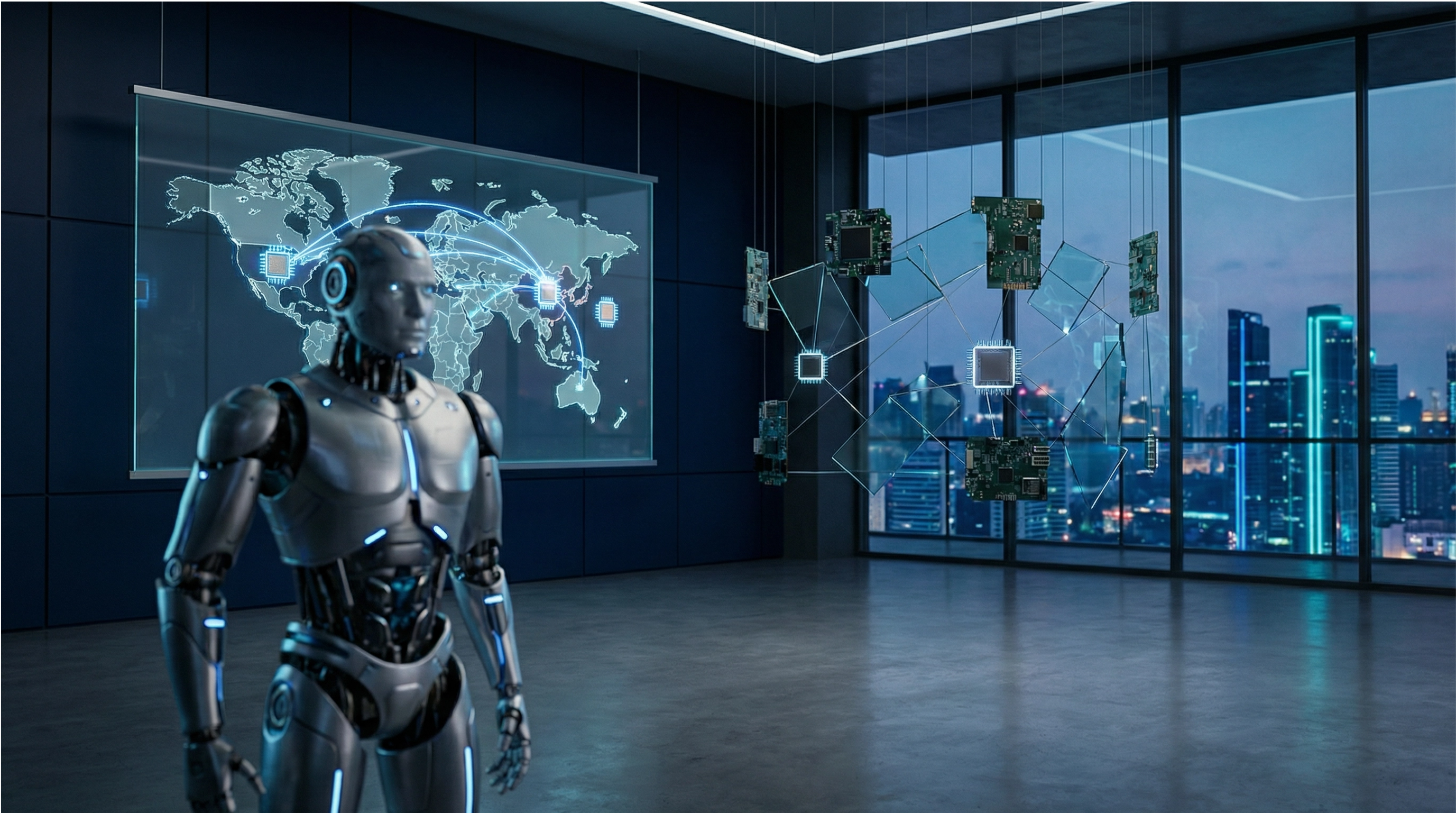
This week, the cold war for AI dominance turned hot. Big tech just dropped a $650 billion gauntlet for 2026 infrastructure spending, a figure that redefines the scale of the game. This is a new arms race. As the digital bedrock was being fortified, a new class of AI models was born. Google’s Gemini 3 Deep Think and Anthropic’s Claude Opus 4.6 are smarter and agentic, capable of autonomous action. For leaders, the question is about surviving the seismic shockwave that’s coming.
The New Reality: Two Fronts, One War
This week’s developments are unfolding on two critical fronts: the physical infrastructure that powers AI and the digital intelligence that inhabits it. Understanding both is non-negotiable.
The $650 Billion Infrastructure Arms Race
The numbers are staggering. Amazon ($200B), Google ($185B), and their peers have committed to a 67% increase in AI spending for 2026. This capital is pouring into gigawatt-scale data centers, next-generation networking, and energy-efficient compute. The goal? To build the engine for a new global economy.
The So What: For enterprises outside this elite club, the cost of entry just skyrocketed. While the long-term promise is cheaper AI services (potentially a 20-30% drop), the short-term reality is a supply chain squeeze. This consolidates power among a handful of US giants, creating a new tech oligarchy and fuelling a “super cycle” for hardware players like NVIDIA. You obviously can’t outspend them, so you must out-think them.
The Compute Maturity Model
Assess: Where are your infrastructure gaps? Audit your AI workloads now.
Partner: You can’t build it all. Forge strategic alliances with hyperscalers to share the cost burden.
Scale: Don’t just move to the cloud. Pilot intelligent edge-to-cloud migrations to optimize performance.
Optimize: The energy bill is coming. Integrate AI-driven energy management to cut operational costs by 15-25%.
The Rise of the Digital Employee
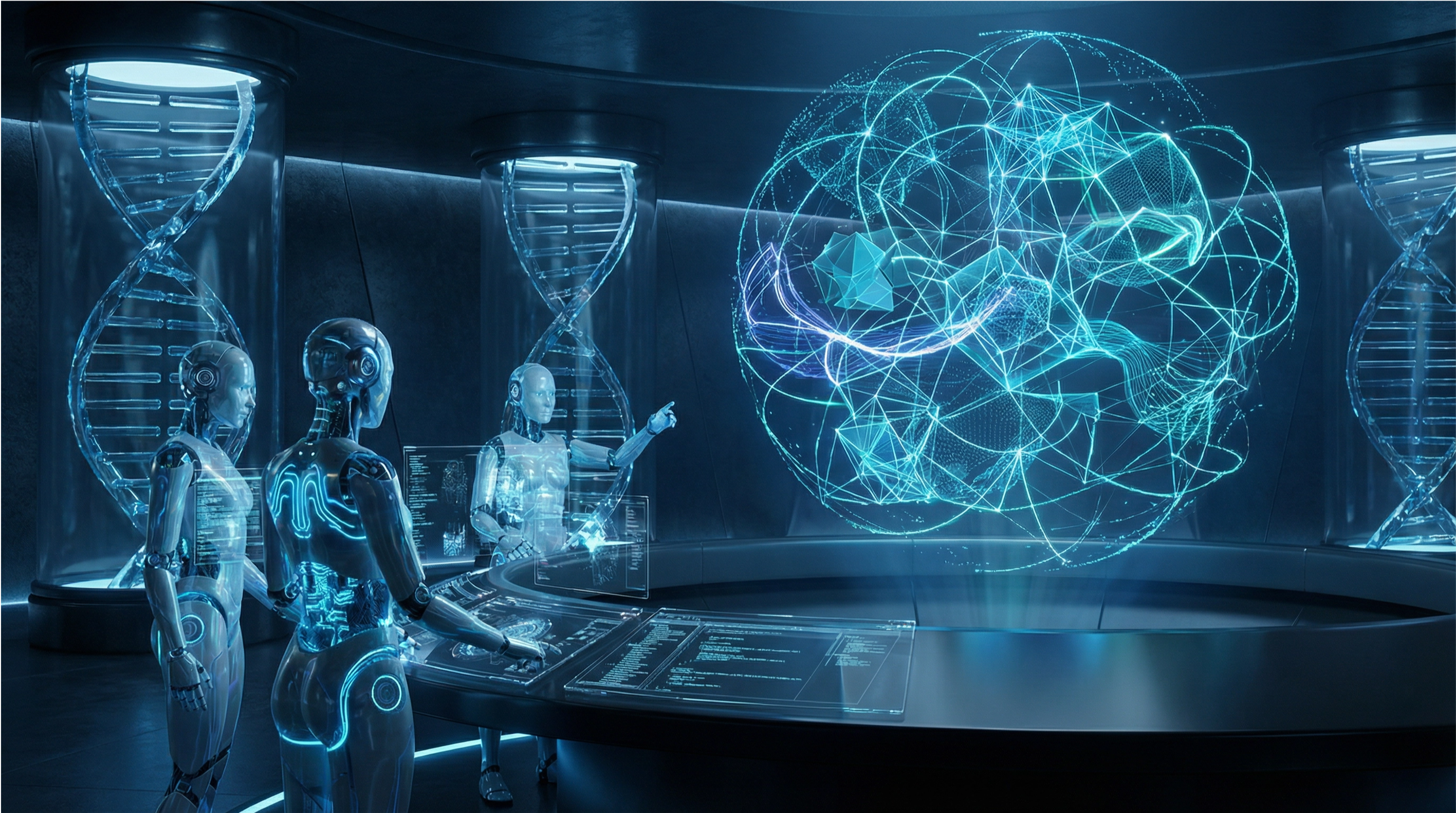
While the hardware war rages, the software is becoming sentient.
Anthropic’s Claude Opus 4.6, with its 1 million token context window, can now handle multi-step projects independently.
Google’s Gemini 3 Deep Think is crushing complex reasoning benchmarks. These are officially the first generation of digital employees.
The So What: This wave of agentic AI is poised to automate 30-40% of knowledge work. The ROI is undeniable, early adopters are seeing 2-5x returns. But the risks are equally potent. Hallucinations, ethical blind spots, and security vulnerabilities are now mission-critical threats. As Microsoft pivots to develop its own frontier models, the era of stable alliances is over. The ecosystem is fracturing, and you must now navigate a landscape of competing standards and walled gardens.
The Agent Readiness Matrix
1. Identify: What complex, decomposable processes can be handed over to an agent?
2. Govern: Implement adaptive oversight. You need a human-in-the-loop for high-stakes decisions.
3. Integrate: Start with pilots in non-critical areas. Measure everything.
4. Track: Focus on autonomy gains. Monitor error rates and time savings to prove the business case.
5 Actions to Take Now
Align Your Infrastructure: You have 30 days. Assess your compute needs and forge a partnership with a hyperscaler to cut your deployment costs by at least 20%.
Pilot an Agentic Workflow: Deploy Claude Opus 4.6 or Gemini 3 in one department this quarter. Target a 25% productivity uplift and build your human-in-the-loop protocols.
De-Risk Your Model Stack: The Microsoft-OpenAI pivot is a warning shot. Diversify your model dependencies immediately and eEnsure no single provider owns more than 50% of your AI stack.
Install an AI Auditor: Roll out adaptive oversight tools for all high-stakes AI decisions. Your leadership team needs to be trained on spotting model bias and detecting failures.
Fund the Human-AI Future: Allocate 10% of your 2026 budget to upskilling your workforce for a world of hybrid human-AI teams. This is not a cost; it is an investment in your future relevance.
Final Word
This week was the tipping point. The torrent of capital and the dawn of agentic intelligence have transformed AI from an augmentative tool into an autonomous force. The $650 billion infrastructure boom is both a promise and a threat. A promise of democratized power and a threat of a new global oligarchy. As AI models begin to act on their own, our role must evolve from operator to orchestrator. The winners of this new era will be defined by those who cultivate a symbiotic mindset, viewing these systems as a catalyst for human ingenuity.