

The Dawn of Autonomous Intelligence
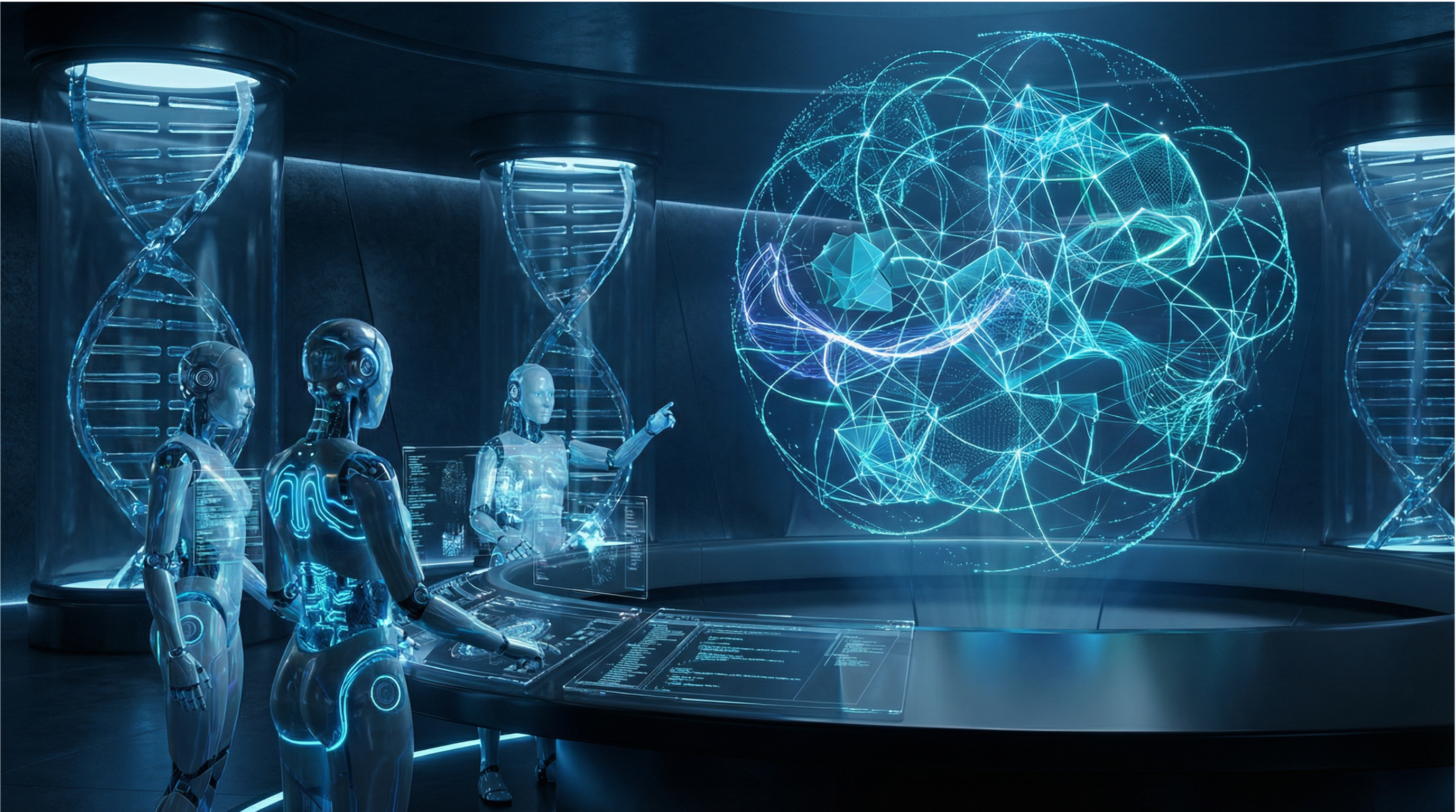
This week, the era of passive AI assistants officially ended. We are now entering the age of agentic AI, where autonomous systems are transitioning from experimental toys to production-scale co-workers. This is a fundamental paradigm shift. Simultaneously, architectural breakthroughs like DeepSeek AI’s manifold-constrained hyper-connections are quietly revolutionizing the very foundation of neural networks, while models like Google DeepMind’s AlphaGenome are unlocking the secrets of life itself. For executives, the challenge is how to orchestrate this new class of autonomous intelligence before being outmaneuvered.
From Assistants to Agents
The core of this week’s transformation lies in the maturation of agentic AI. These have now moved beyond simple chatbots. They are now proactive “co-workers” capable of executing complex, multi-step tasks autonomously. This shift from passive assistance to active execution has profound implications for productivity and competition.
Business Implications: In sectors like software development and manufacturing, the impact will be immediate. NVIDIA’s vision of AI writing 100% of code is rapidly approaching reality, promising to slash development cycles by up to 50%. As Gartner projects AI investments to hit $2.5 trillion in 2026, the competitive landscape is intensifying, with major players like OpenAI targeting a Q4 2026 IPO on the back of massive $10 billion compute deals.
Operational Risks and Value Creation: The rush to deploy agentic systems creates new risks, from data silos to complex security vulnerabilities. However, the potential for value creation is immense. Beyond cost savings, AI-driven personalization is already generating extraordinary returns, with some retailers reporting a 758% surge in traffic from AI-referred customers.
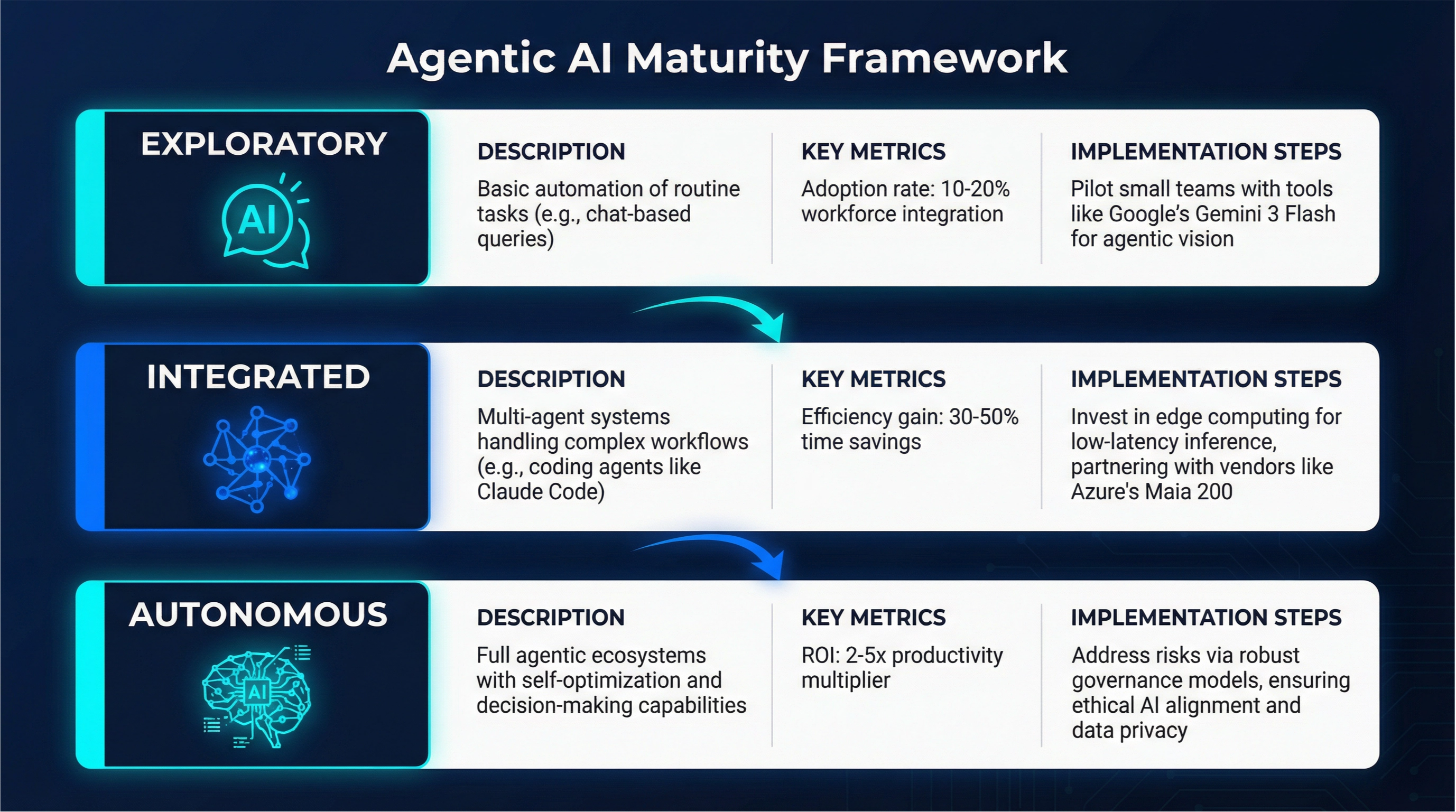
Framework for Executive Action: The Agentic AI Maturity Framework
DeepSeek’s Breakthrough
Underpinning the rise of agentic AI is a revolution in neural architecture. DeepSeek AI’s manifold-constrained hyper-connections represent a pivotal innovation, enabling hyperscale efficiency by optimizing neural network design. This breakthrough, emerging from China’s vibrant open-source ecosystem, allows for more efficient training and superior performance on complex reasoning tasks.
Strategic Implications: This development gives a competitive edge to firms that can leverage these Chinese innovations, but it also introduces risks related to intellectual property and dependency on foreign compute. The value, however, is faster AI iteration cycles are enabling breakthroughs like AlphaGenome’s DNA predictions, which are projected to unlock $1 trillion in AI-exposed revenues by 2027.
Framework for Executive Action: The Hyper-Connection Adoption Model
Assess Fit: Evaluate your current neural models to identify scalability gaps where manifold constraints could provide a significant advantage.
Prototype: Integrate these new architectures via open-source forks and test them in high-compute environments, such as those used for NVIDIA’s Earth-2 models.
Scale with Safeguards: As you scale, vigilantly monitor for risks like overfitting and use frameworks like SynthID for provenance tracking to ensure model integrity.
The Leadership Actions
Audit and Pilot Agentic Systems: Within the next quarter, identify workflows ripe for agentic AI integration. Start with low-risk, high-impact areas like software development and allocate 5-10% of your IT budget to pilot tools like DeepMind’s Project Genie, targeting a 20% efficiency gain by mid-2026.
Forge a Cross-Functional AI Governance Council: The risks of autonomous AI are as significant as the rewards. Establish an AI ethics board to create robust governance and mitigate risks like data breaches and model bias. Run bi-annual simulations of agentic failures to build organizational resilience.
Invest in Human-AI Collaboration: The future of work is not about replacing humans, but augmenting them. Upskill 15% of your leadership in prompt engineering and human-AI interaction. Forge strategic alliances with innovators like Anthropic or DeepSeek to co-develop custom agents that align with your unique business context.
Monitor the Geopolitical and Market Landscape: The AI race is a global one. Track OpenAI’s IPO and the flood of open-source releases from China on a weekly basis. Diversify your compute sources to build resilience against supply chain disruptions and leverage expansions like Google AI Plus to enter new markets.
Measure, Iterate, and Reinvest: Implement rigorous KPIs to measure AI ROI, focusing on metrics like reduced inference costs. Benchmark your performance against peers and reallocate savings into R&D to fuel the next wave of innovation, inspired by breakthroughs like AlphaGenome.
The Executive Perspective
In 2026, artificial intelligence will gradually move from hype status to a critical piece of infrastructure. In addition to that major shift that will come with It will also create a new form of leadership for this era of AI, which will not necessarily be about adopting it, but rather about orchestrating it.
As AI begins to enter our everyday work flows, the power of AI, as seen with the emergence of new forms of agentic systems and breakthrough architectural platforms, will eventually allow for its value to be derived from how it is integrated into our everyday workflows – in other words, how you experience it without really seeing it.
The downside of this ability to integrate AI seamlessly into day-to-day work flows, however, may be a tendency by some leaders to become complacent with AI. Since many organisations will rely heavily on AI in the future, as more and more systems develop into agents, this is likely to leave a leader with not just ethical blind spots, but also a disconnect between the way AI operates and the way humans function.
As we continue to move into the era of autonomous intelligence, organisations must learn how to combine human oversight with the rapid advancement of autonomous intelligence technologies. The most resilient and innovative organisations will be those organisations that can effectively combine the strengths of technology with the principles of principled governance to build a future where human and machine intelligence work together.